

Most people make the same mistake when they start using AI.
They immediately look for something spectacular.
"Write my business plan."
"Create my marketing strategy."
"Build my startup."
"Replace my entire workflow."
When the results aren't perfect, disappointment comes quickly.
"AI isn't as good as people say."
"It's still not there yet."
"Maybe in another year."
I've seen this pattern countless times.
What's interesting is that the people who get the most value from AI almost never work this way.
They don't begin with ambitious prompts.
They begin with problems so small they hardly seem worth solving.
They rewrite one email.
Summarize one PDF.
Generate three headline ideas.
Translate a paragraph.
Organize meeting notes.
None of those tasks feels revolutionary.
Yet those same people often become the strongest advocates for AI within just a few weeks.
Why?
Because they're experiencing something most newcomers never notice.
AI doesn't become valuable when it replaces your job.
It becomes valuable when it quietly removes friction from your day.
They immediately look for something spectacular.
"Write my business plan."
"Create my marketing strategy."
"Build my startup."
"Replace my entire workflow."
When the results aren't perfect, disappointment comes quickly.
"AI isn't as good as people say."
"It's still not there yet."
"Maybe in another year."
I've seen this pattern countless times.
What's interesting is that the people who get the most value from AI almost never work this way.
They don't begin with ambitious prompts.
They begin with problems so small they hardly seem worth solving.
They rewrite one email.
Summarize one PDF.
Generate three headline ideas.
Translate a paragraph.
Organize meeting notes.
None of those tasks feels revolutionary.
Yet those same people often become the strongest advocates for AI within just a few weeks.
Why?
Because they're experiencing something most newcomers never notice.
AI doesn't become valuable when it replaces your job.
It becomes valuable when it quietly removes friction from your day.
We Expect AI to Be a Miracle
For decades, technology has been marketed through dramatic transformations.
The internet would change everything.
Cloud computing would change everything.
Mobile apps would change everything.
Naturally, people expect AI to do the same.
They look for one magical prompt that suddenly doubles productivity.
One conversation that replaces an employee.
One workflow that transforms an entire company.
Those moments certainly exist.
But they aren't where most of AI's value comes from.
Imagine buying a smartphone and judging it only by whether it can replace your laptop.
You would completely overlook everything that makes it useful dozens of times every single day.
AI works in a surprisingly similar way.
Its greatest strength isn't doing one impossible thing.
It's doing hundreds of ordinary things remarkably well.
The internet would change everything.
Cloud computing would change everything.
Mobile apps would change everything.
Naturally, people expect AI to do the same.
They look for one magical prompt that suddenly doubles productivity.
One conversation that replaces an employee.
One workflow that transforms an entire company.
Those moments certainly exist.
But they aren't where most of AI's value comes from.
Imagine buying a smartphone and judging it only by whether it can replace your laptop.
You would completely overlook everything that makes it useful dozens of times every single day.
AI works in a surprisingly similar way.
Its greatest strength isn't doing one impossible thing.
It's doing hundreds of ordinary things remarkably well.
The Hidden Cost of Tiny Interruptions
A typical knowledge worker rarely spends an entire day solving complex problems.
Instead, the day is filled with interruptions.
Writing another email.
Searching through documents.
Changing the tone of a message.
Summarizing a meeting.
Looking for information already read yesterday.
Finding a better title.
Formatting notes.
Each interruption takes somewhere between thirty seconds and three minutes.
Individually, they're insignificant.
Collectively, they dominate the workday.
Most people don't notice this because our brains naturally remember the large tasks.
The tiny interruptions simply disappear from memory.
Unfortunately, they don't disappear from the calendar.
They quietly consume hours every week.
This is exactly where AI performs best.
Not because the work is difficult.
Because it's repetitive.
Instead, the day is filled with interruptions.
Writing another email.
Searching through documents.
Changing the tone of a message.
Summarizing a meeting.
Looking for information already read yesterday.
Finding a better title.
Formatting notes.
Each interruption takes somewhere between thirty seconds and three minutes.
Individually, they're insignificant.
Collectively, they dominate the workday.
Most people don't notice this because our brains naturally remember the large tasks.
The tiny interruptions simply disappear from memory.
Unfortunately, they don't disappear from the calendar.
They quietly consume hours every week.
This is exactly where AI performs best.
Not because the work is difficult.
Because it's repetitive.
Introducing the AI Compound Effect
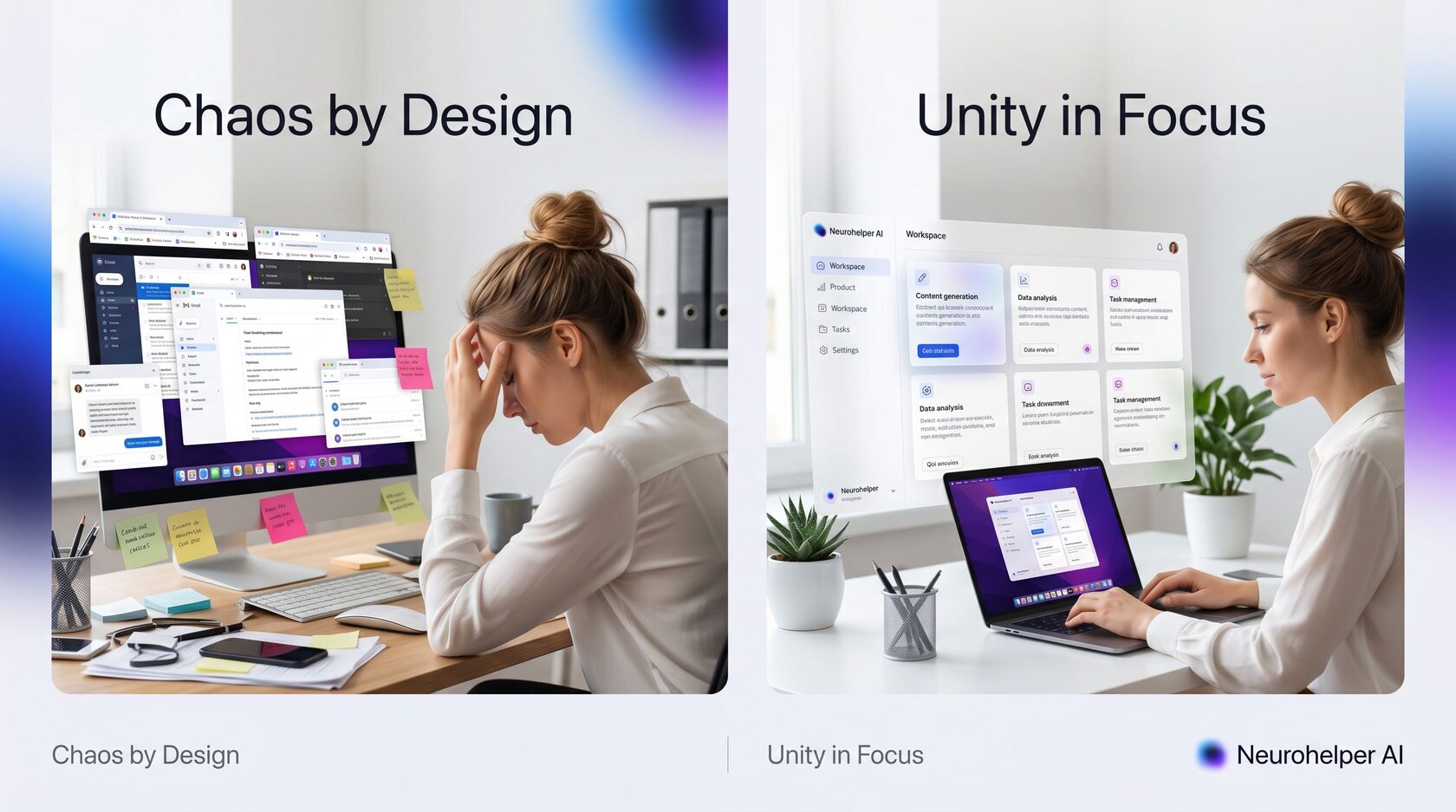
One of the ideas we've found most useful is something we call the AI Compound Effect.
The principle is simple.
Most people search for one AI task that saves an hour.
Experienced AI users search for sixty tasks that each save one minute.
Mathematically, the outcome is almost identical.
Psychologically, it's completely different.
Large automations take planning.
Small automations become habits.
And habits compound.
If AI saves you forty-five seconds every time you reply to an email, summarize a document, brainstorm a headline, or organize meeting notes, those seconds begin stacking on top of each other.
You rarely notice the first one.
By the end of the month, you've recovered several hours.
Not through one dramatic breakthrough.
Through dozens of almost invisible improvements.
That's why experienced AI users often seem dramatically more productive than everyone else.
They're not necessarily using better models.
They're simply benefiting from hundreds of tiny decisions they automated weeks ago.
The principle is simple.
Most people search for one AI task that saves an hour.
Experienced AI users search for sixty tasks that each save one minute.
Mathematically, the outcome is almost identical.
Psychologically, it's completely different.
Large automations take planning.
Small automations become habits.
And habits compound.
If AI saves you forty-five seconds every time you reply to an email, summarize a document, brainstorm a headline, or organize meeting notes, those seconds begin stacking on top of each other.
You rarely notice the first one.
By the end of the month, you've recovered several hours.
Not through one dramatic breakthrough.
Through dozens of almost invisible improvements.
That's why experienced AI users often seem dramatically more productive than everyone else.
They're not necessarily using better models.
They're simply benefiting from hundreds of tiny decisions they automated weeks ago.
The Friction Principle
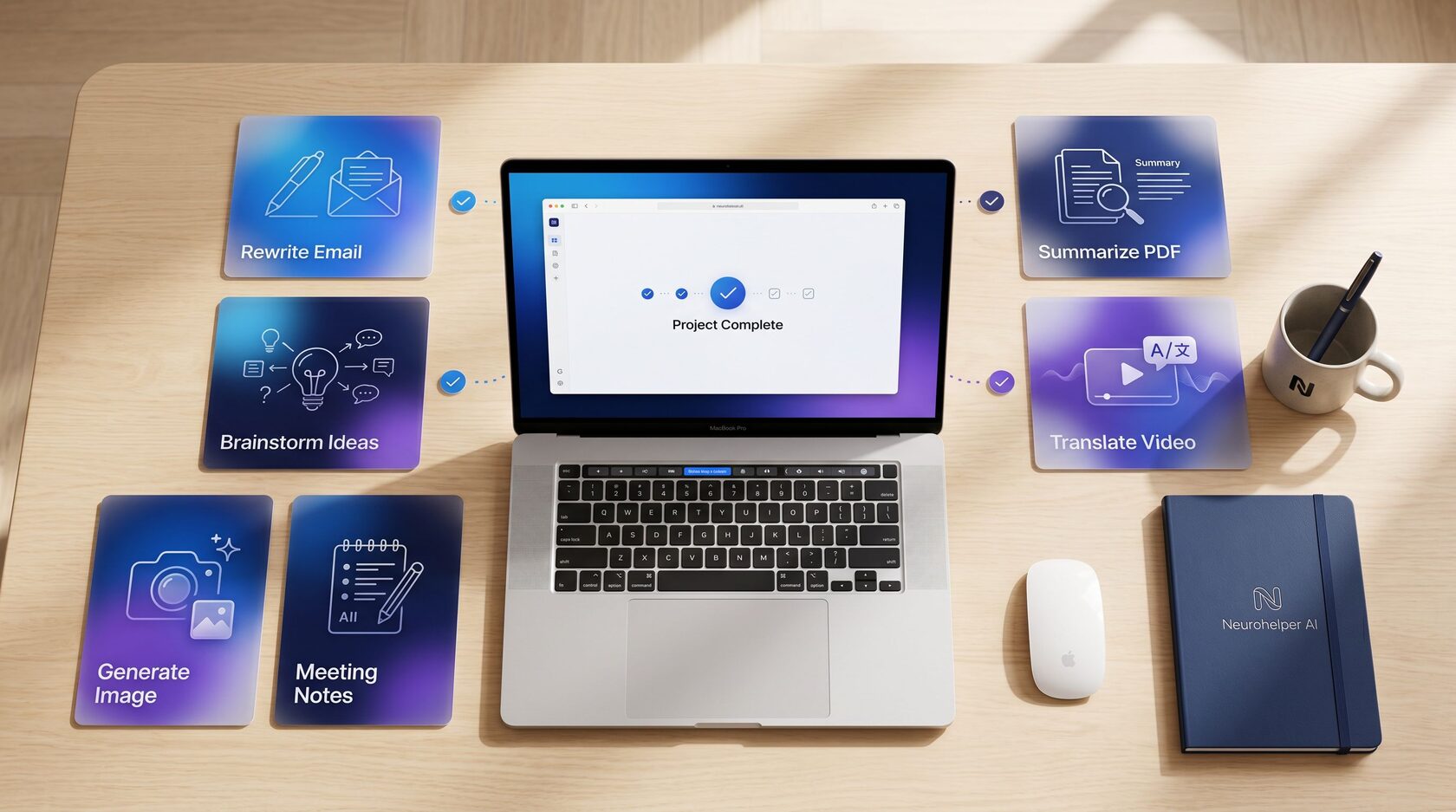
There's another pattern you'll start noticing once AI becomes part of your daily routine.
Most of your work isn't difficult.
It's interrupted.
You're writing an article.
An email arrives.
You stop.
You answer it.
Then you return to your article.
A meeting finishes.
You need to summarize it.
Then someone asks for a document.
You search your folders.
Then you need to rewrite a Slack message before sending it.
None of these activities is particularly challenging.
But every interruption comes with a hidden cost.
Researchers have long described the productivity penalty of switching contexts. Returning to a task isn't instantaneous—you spend time rebuilding focus.
We call this AI Friction.
AI Friction isn't the work itself.
It's every tiny interruption that pulls you away from meaningful work.
The interesting part is that AI excels at reducing exactly this kind of friction.
Instead of switching into "email mode," you let AI improve your draft.
Instead of reading a 40-page PDF before deciding whether it's relevant, you ask for a summary.
Instead of manually formatting meeting notes, AI structures them automatically.
Each interruption becomes shorter.
Eventually, many disappear completely.
That's when work starts feeling different.
Not faster.
Smoother.
Most of your work isn't difficult.
It's interrupted.
You're writing an article.
An email arrives.
You stop.
You answer it.
Then you return to your article.
A meeting finishes.
You need to summarize it.
Then someone asks for a document.
You search your folders.
Then you need to rewrite a Slack message before sending it.
None of these activities is particularly challenging.
But every interruption comes with a hidden cost.
Researchers have long described the productivity penalty of switching contexts. Returning to a task isn't instantaneous—you spend time rebuilding focus.
We call this AI Friction.
AI Friction isn't the work itself.
It's every tiny interruption that pulls you away from meaningful work.
The interesting part is that AI excels at reducing exactly this kind of friction.
Instead of switching into "email mode," you let AI improve your draft.
Instead of reading a 40-page PDF before deciding whether it's relevant, you ask for a summary.
Instead of manually formatting meeting notes, AI structures them automatically.
Each interruption becomes shorter.
Eventually, many disappear completely.
That's when work starts feeling different.
Not faster.
Smoother.
Why Bigger Models Aren't Always Better
Every few months a new AI model is released.
It writes better.
Reasons better.
Generates more realistic images.
Produces longer responses.
These improvements matter.
But they aren't usually what changes someone's daily productivity.
Imagine upgrading from a sports car capable of 300 km/h to one capable of 340 km/h.
It's impressive.
But if your daily commute is through city traffic, you'll barely notice the difference.
AI is similar.
For most professionals, productivity isn't limited by model intelligence.
It's limited by workflow design.
A better workflow with today's models often delivers more value than the newest model inside a broken workflow.
That's why experienced AI users spend less time asking:
"What's the smartest model?"
And more time asking:
"What's the next repetitive task I can remove?"
It writes better.
Reasons better.
Generates more realistic images.
Produces longer responses.
These improvements matter.
But they aren't usually what changes someone's daily productivity.
Imagine upgrading from a sports car capable of 300 km/h to one capable of 340 km/h.
It's impressive.
But if your daily commute is through city traffic, you'll barely notice the difference.
AI is similar.
For most professionals, productivity isn't limited by model intelligence.
It's limited by workflow design.
A better workflow with today's models often delivers more value than the newest model inside a broken workflow.
That's why experienced AI users spend less time asking:
"What's the smartest model?"
And more time asking:
"What's the next repetitive task I can remove?"
Five AI Habits Worth Building Today
You don't need to redesign your entire workflow overnight.
Start with one habit.
Then let momentum do the rest.
1.Rewrite Before You Send
Even strong writers benefit from editing.
Instead of asking AI to write everything from scratch, write naturally first.
Then ask AI to improve clarity, tone, or structure.
You keep your own voice while removing unnecessary friction.
2. Never Read Before You Scan
Long reports.
Research papers.
Documentation.
Contracts.
Instead of diving directly into the full document, ask AI for:
Reading becomes intentional instead of exhausting.
Research papers.
Documentation.
Contracts.
Instead of diving directly into the full document, ask AI for:
- key points
- summary
- action items
- potential risks
- questions worth investigating
Reading becomes intentional instead of exhausting.
3. Brainstorm Before Creating
Blank pages are intimidating.
Whether you're writing an article, planning a presentation, designing a landing page, or preparing social media content, spend two minutes generating possibilities before making decisions.
AI doesn't replace creativity.
It expands the number of starting points.
Whether you're writing an article, planning a presentation, designing a landing page, or preparing social media content, spend two minutes generating possibilities before making decisions.
AI doesn't replace creativity.
It expands the number of starting points.
4. Let AI Organize Information
Humans are excellent at making decisions.
Computers are excellent at organizing information.
Whenever you find yourself formatting notes, cleaning tables, organizing lists, or restructuring text, ask whether AI should do that part instead.
Computers are excellent at organizing information.
Whenever you find yourself formatting notes, cleaning tables, organizing lists, or restructuring text, ask whether AI should do that part instead.
5. Build One Repeatable Workflow
The biggest productivity gains rarely come from isolated prompts.
They come from repeatable systems.
For example:
Receive a meeting recording.
↓
Generate a transcript.
↓
Summarize key decisions.
↓
Extract action items.
↓
Create follow-up emails.
↓
Schedule next steps.
Once this becomes a habit, you'll never want to return to the manual process.
They come from repeatable systems.
For example:
Receive a meeting recording.
↓
Generate a transcript.
↓
Summarize key decisions.
↓
Extract action items.
↓
Create follow-up emails.
↓
Schedule next steps.
Once this becomes a habit, you'll never want to return to the manual process.
AI Isn't Replacing Work
One of the most common headlines about artificial intelligence is:
"AI will replace jobs."
Reality is usually less dramatic.
In practice, AI removes tiny pieces of work.
One email.
One summary.
One translation.
One image.
One document.
One meeting.
Individually, none of these feels revolutionary.
Together, they fundamentally change how a workday feels.
That's a much more realistic—and much more exciting—vision of AI.
"AI will replace jobs."
Reality is usually less dramatic.
In practice, AI removes tiny pieces of work.
One email.
One summary.
One translation.
One image.
One document.
One meeting.
Individually, none of these feels revolutionary.
Together, they fundamentally change how a workday feels.
That's a much more realistic—and much more exciting—vision of AI.
Start Smaller Than You Think
If you only remember one idea from this article, let it be this:
Don't ask AI to transform your business tomorrow.
Ask it to remove one small annoyance today.
Rewrite an email.
Summarize a document.
Generate a better title.
Translate a page.
Organize your notes.
Tomorrow, automate one more.
By the end of the year, you'll have built something far more valuable than one impressive prompt.
You'll have built a better way of working.
That's the real promise of AI.
Not replacing people.
Helping people spend more of their time on work that actually matters.
Don't ask AI to transform your business tomorrow.
Ask it to remove one small annoyance today.
Rewrite an email.
Summarize a document.
Generate a better title.
Translate a page.
Organize your notes.
Tomorrow, automate one more.
By the end of the year, you'll have built something far more valuable than one impressive prompt.
You'll have built a better way of working.
That's the real promise of AI.
Not replacing people.
Helping people spend more of their time on work that actually matters.
Conclusion
The biggest mistake people make with AI isn't choosing the wrong model.
It's looking for the wrong outcome.
AI isn't most valuable when it solves impossible problems.
It's most valuable when it quietly removes the small interruptions that fill every working day.
Those interruptions are easy to ignore.
Until they disappear.
And once they do, something interesting happens.
You don't necessarily work harder.
You don't even feel dramatically faster.
You simply finish your day with more attention left for the work that matters.
That's the AI Compound Effect.
Not one spectacular breakthrough.
Hundreds of tiny improvements.
Working together.
Every single day.
Start with one habit today.
You don't need ten AI tools or the most advanced model available.
You need one repetitive task that no longer deserves your attention.
Once you experience that first small win, the next one becomes obvious.
That's how real AI adoption begins.
It's looking for the wrong outcome.
AI isn't most valuable when it solves impossible problems.
It's most valuable when it quietly removes the small interruptions that fill every working day.
Those interruptions are easy to ignore.
Until they disappear.
And once they do, something interesting happens.
You don't necessarily work harder.
You don't even feel dramatically faster.
You simply finish your day with more attention left for the work that matters.
That's the AI Compound Effect.
Not one spectacular breakthrough.
Hundreds of tiny improvements.
Working together.
Every single day.
Start with one habit today.
You don't need ten AI tools or the most advanced model available.
You need one repetitive task that no longer deserves your attention.
Once you experience that first small win, the next one becomes obvious.
That's how real AI adoption begins.