
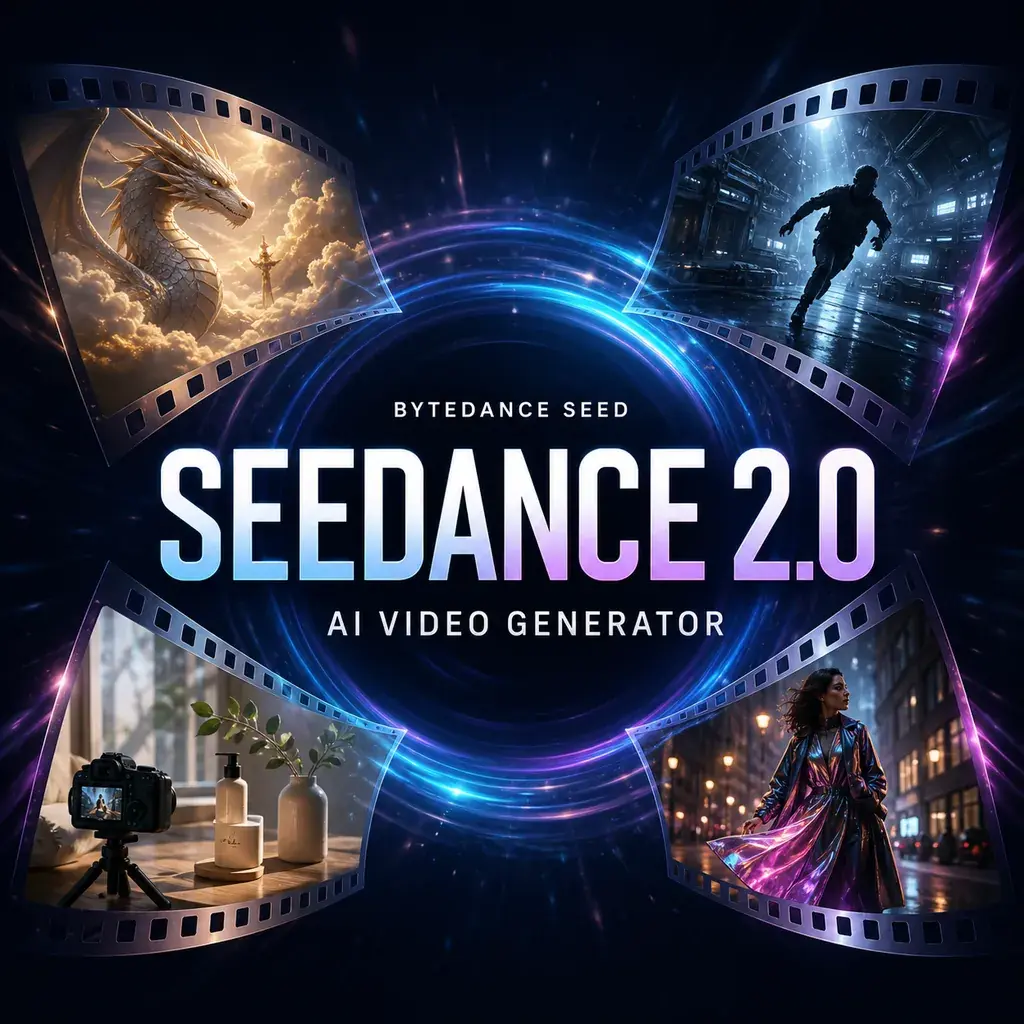
Seedance 2.0 proven AI video at a lower production cost
Create polished 15-second audiovisual scenes for original stories, action, UGC, product campaigns, and social content. Seedance 2.0 remains available in Neurohelper AI as a mature, more economical alternative to the newer Seedance 2.5.


Seedance 2.0 lives inside the same Neurohelper AI subscription as Seedance 2.5 and other leading video, image, chat, voice, sound, and music models. Develop the concept in Chat Master, create references in Image Master, animate in Video Master, and finish the soundtrack in Audio Master without rebuilding the workflow across separate subscriptions.
Seedance 2.0 overview
A production model that still earns its place beside Seedance 2.5
Seedance 2.0 was built around unified audiovisual generation rather than silent image animation. It can plan several shots, follow demanding motion instructions, use mixed reference materials, preserve a visual direction, and create sound that responds to the scene. The newer 2.5 model raises the ceiling, but 2.0 remains highly practical when the brief fits inside a focused 15-second result.
Direct complete moments
Move beyond idle camera drift with actions, reactions, transitions, close-ups, reveals, and an ending that resolves the idea.
Reference what matters
Use source images, motion, camera language, composition, sound, and other materials to communicate intent more precisely.
Build audiovisual rhythm
Let voice, Foley, ambience, effects, and music reinforce cuts, physical movement, emotional beats, and campaign pacing.
Practical workflows
Use the model as a generator, reference engine, or editor
The underlying Seedance 2.0 architecture accepts several kinds of creative direction. Exact controls can vary by the active Neurohelper AI integration, but the production logic stays consistent.
Idea or image to video
Start from a written scene, a designed keyframe, a product visual, or a character image and direct the movement, shots, sound, and final beat.
Mixed creative materials
Guide composition, subject identity, visual style, camera movement, motion rhythm, effects, or audio using multiple source materials.
Continue or modify footage
Extend an existing scene or request targeted changes while preserving the useful parts of the original audiovisual result.
Eight real Seedance 2.0 outputs
Creative storytelling and marketing, grouped by the job they solve
These are published Neurohelper AI generations, not hypothetical placeholders. The first group tests character, action, visual continuity, and story progression; the second focuses on product attention, creator-style delivery, and memorable campaign ideas.
Creative stories, characters, and cinematic motion
Use Seedance 2.0 when the clip must feel like a directed scene rather than a moving still.
The Little Dragon Who Was Afraid to Fly
An original picture-book character, cover, and keyframes become a warm family-fantasy trailer with coherent emotion, magical atmosphere, and a recognizable hero.
View a recreation prompt
Use the supplied little-dragon character and cinematic story keyframes as identity, world, and composition references. Create a 10-second family-fantasy trailer in three connected shots: a close emotional hesitation, a wider attempt to fly through glowing clouds, and a hopeful final reveal above the valley. Preserve the dragon’s green scales, large expressive eyes, proportions, and gentle personality. Use warm sunset light, soft volumetric clouds, restrained camera movement, natural wing effort, and a clear emotional progression from fear to courage. Add delicate wind, wing movement, one rising orchestral phrase, and no dialogue. No text, logo, character redesign, duplicate dragon, abrupt location jump, or exaggerated comedy.
A Story Steps Beyond the Television
A boy watching a glowing fantasy scene discovers that the small dragon is no longer confined to the screen—a compact test of scale, interaction, and cinematic wonder.
View a recreation prompt
Begin from the supplied living-room keyframe with the child facing a television and the same small green dragon visible inside the glowing fantasy image. Create a 10-second cinematic scene with one continuous emotional idea: golden light spills from the screen, the dragon carefully crosses the boundary into the room at toy-like scale, and the child reaches forward and gently steadies it. Preserve the child, dragon identity, room layout, television position, and warm evening color. Keep the movement slow, believable, and family-friendly; use a subtle push-in and natural eye contact. Native audio: quiet room ambience, a soft magical shimmer, tiny claws on the floor, and one warm musical resolve. No extra creature, sudden size change, distorted hands, screen explosion, text, or logo.
A Tight Elevator Fight with Readable Movement
Two fictional opponents exchange controlled strikes inside a confined metallic space, showing how the model handles contact, reactions, camera geography, and fast physical beats.
View a recreation prompt
Create a 15-second cinematic action scene inside one modern stainless-steel elevator with two entirely fictional adult characters: one unmasked protagonist in a black leather jacket and one masked opponent in matte tactical clothing. Use exactly four readable action beats with clean coverage: block the first strike, controlled elbow counter, brief separation against opposite walls, final disarm and held standoff. Keep both bodies anatomically stable, preserve left-right screen direction, and make every contact physically motivated. Use short hard cuts between a wide two-person view, one close reaction, one side angle, and a final stable wide shot. Native audio: elevator hum, clothing movement, restrained impacts, breath, and one floor chime. No weapons entering or disappearing, duplicate limbs, teleporting, continuous morphing, gore, text, or real-person resemblance.
Two Scripts, One Video Model
Two different story directions from Claude Fable 5 and GPT-5.6 Sol Pro are animated through the same Seedance 2.0 workflow, separating writing choices from video-model execution.
View the controlled test setup
Prepare two short scripts around the same high-level fantasy brief, runtime, aspect ratio, visual quality target, and review criteria. Give each script its own approved opening keyframe, then animate both with Seedance 2.0 using the same motion intensity, shot count, sound requirements, and 15-second limit. Preserve the subject identity and environment supplied for each version. Judge the outputs on narrative clarity, motion stability, emotional pacing, camera readability, audiovisual rhythm, and whether the ending resolves the script. Do not change the brief after seeing the first result; the purpose is to compare scenario direction rather than optimize one side selectively.
UGC, product campaigns, and social advertising
Use the same motion and audiovisual strengths to turn products and campaign concepts into short content people can actually watch.
Frozen Raspberries Become an Appetizing Creator Ad
A creator-style concept combines a quick visual hook, tactile product close-ups, an authentic reaction, and vertical pacing suited to short-form social media.
View a recreation prompt
Use the supplied creator and fictional frozen-raspberries-in-chocolate product keyframe as the visual reference. Create a 15-second vertical UGC advertisement in a bright real home kitchen. Open with the creator holding the cup near camera and saying one short natural hook; cut to a macro close-up of one frozen raspberry with visible chocolate texture; return to a genuine tasting reaction and a clean final product hold. Preserve the creator’s face, hands, clothing, cup design, product color, and kitchen continuity. Use handheld phone-camera energy without excessive shake, believable chewing, crisp wrapper and cup sounds, light room ambience, and conversational delivery. No extra fingers, melting product, unreadable invented claims, aggressive zooms, duplicated cup, or fake brand logo.
A Close Beauty Demo Led by Expression, Not Spectacle
A simple lip-product application keeps attention on the creator’s face, the applicator, small gestures, and a believable social recommendation.
View a recreation prompt
Use the supplied fictional beauty creator and unbranded lip-treatment applicator as identity and product references. Create a 15-second vertical creator video in soft window light. Keep one stable close framing: she introduces the texture in a short conversational sentence, applies one controlled stroke to the lower lip, looks into the camera, and finishes with a subtle satisfied reaction while holding the product beside her face. Preserve facial identity, lip shape, applicator size, hand anatomy, clothing, and room background. Use realistic micro-expressions, natural pauses, quiet room tone, and close clean voice. No dramatic transformation, duplicate applicator, extra fingers, smeared product, changing makeup, floating hand, readable medical claim, logo, or beauty-filter look.
A Panda Turns a Mattress Benefit into a Memorable Visual
A cheerful fictional panda character gives a familiar product category a playful hook while keeping the bed, room, bounce, and final campaign beat readable.
View a recreation prompt
Create a 15-second playful vertical commercial for a completely fictional mattress brand. A friendly original panda enters a bright minimal bedroom, performs one gentle controlled bounce on the center of the mattress, settles comfortably, and looks toward camera as the surface returns smoothly to shape. Keep the mattress geometry, bedding, room layout, panda proportions, and lighting consistent. Use three clean shots: room reveal, side view of the single bounce, and calm final product composition. Native audio: soft footsteps, one cushioned impact, fabric movement, a playful two-note motif, and no dialogue. No known mascot, repeated bouncing, broken bed, extreme deformation, duplicate panda, text, real logo, slapstick collision, or room transformation.
One Walk Becomes a Sequence of Campaign Looks
A continuous city walk carries several controlled wardrobe changes while preserving the model’s identity, direction, posture, and campaign rhythm.
View a recreation prompt
Use the supplied fictional fashion model walking toward camera on a clean city street as the identity, composition, and movement reference. Create a 12-second fashion campaign with a steady backward tracking shot and three clearly separated style changes triggered by natural foreground occlusions: tailored monochrome, vivid evening color, then a refined final streetwear look. Preserve the same face, hair, body proportions, walking direction, street geometry, and camera speed. Each outfit should be complete and stable before the next transition. Use polished daylight, restrained fabric motion, confident pacing, and one rhythmic electronic music bed. No body morph, face change, duplicated person, revealing wardrobe glitch, floating garments, jump in camera position, readable slogan, or real fashion logo.
How to prompt Seedance 2.0
Direct a short production, not a pile of visual adjectives
The strongest prompts establish what must stay consistent, divide the clip into a few visible beats, connect sound to action, and leave enough time for every moment to read.
Lock the anchors
Name the subject, product geometry, wardrobe, location, camera axis, palette, and reference details that must survive every shot.
Sequence the beats
Use two to four shots or one clear continuous move. State what happens first, what changes, and what final composition should hold.
Score the picture
Place dialogue, ambience, Foley, impact sounds, music, and silence beside the action they support instead of treating audio as an afterthought.
Choose one product message or one emotional arc. A complete simple scene is more useful than six half-finished locations, transformations, speakers, and camera tricks competing for the same runtime.
Seedance 2.0 vs Seedance 2.5
Choose by production need, not version number alone
Seedance 2.5 is the newer and more capable model. Seedance 2.0 remains useful because many ads, social videos, action beats, and story moments do not need the longer runtime or more advanced control of the latest release.
Focused, proven, and more economical
- the complete idea fits inside 15 seconds;
- you need multiple variations, drafts, or social outputs;
- the brief has one clear character, product, or story beat;
- cost efficiency matters more than the newest model ceiling;
- the existing 2.0 output quality already meets the campaign.
Longer stories and deeper control
- the story needs up to 30 seconds in one generation;
- several subjects, scenes, and reference assets must stay coordinated;
- realism, long-form continuity, advanced editing, or extensions matter most;
- the result must carry a more complex production arc;
- you want the newest Seedance generation quality.
Practical model selection
Where Seedance 2.0 still performs especially well
Strong uses
- 15-second UGC, product films, fashion, food, and social campaigns;
- family fantasy, stylized characters, compact trailers, and story moments;
- action scenes with a limited cast and readable choreography;
- image-led video that preserves an approved visual direction;
- multimodal reference workflows and targeted video editing;
- native ambience, effects, dialogue, and music synchronized to the picture.
Review carefully when
- the story genuinely needs more than 15 seconds to become understandable;
- many people, locations, props, spoken lines, and transformations compete at once;
- small packaging copy, UI, or legal text must remain pixel-perfect;
- hands perform intricate opening, pouring, assembly, or object-transfer physics;
- real people, public figures, news-like footage, or potentially deceptive media are involved;
- commercial claims require medical, financial, legal, or regulatory approval.
Seedance 2.0 specifications
Compact model reference
Capabilities refer to the underlying model and may vary by active Neurohelper AI integration. Product positioning reflects the current Neurohelper AI catalog. Technical details were checked against the official Seedance 2.0 model page, ByteDance launch article, and Seedance 2.5 model page. Last reviewed August 23, 2026.
Frequently asked questions
Seedance 2.0 FAQ
What is Seedance 2.0?
Seedance 2.0 is ByteDance Seed’s multimodal AI video model for generating and editing audiovisual content from text, image, audio, and video references. It supports focused multi-shot clips up to 15 seconds.
Is Seedance 2.0 still worth using after Seedance 2.5?
Yes when the brief fits inside 15 seconds and production cost matters. Seedance 2.5 is stronger for longer, more complex, and reference-heavy work, while 2.0 remains a capable choice for social ads, UGC, action beats, stylized stories, and iterative variations.
What is the difference between Seedance 2.0 and Seedance 2.5?
Seedance 2.0 supports up to 15-second audiovisual generation. Seedance 2.5 extends single-pass generation to 30 seconds and improves long-form storytelling, multimodal reference capacity, realism, editing, and extension workflows.
Can Seedance 2.0 create native sound?
Yes. The underlying model jointly generates video and stereo audio, including dialogue, ambience, effects, and music aligned with the visual rhythm. Exact controls depend on the current integration.
Can Seedance 2.0 use reference images, audio, and video?
Yes. ByteDance describes support for mixed multimodal input and references to composition, motion, camera language, visual effects, and sound. Available input fields can differ by platform.
Is Seedance 2.0 good for advertising?
Yes. The examples on this page show creator-style food and beauty content, a playful mattress commercial, and a fashion transformation alongside creative trailers and action scenes.
Is Seedance 2.0 available in Neurohelper AI?
Yes. Seedance 2.0 remains available in Video Master as a more economical option alongside Seedance 2.5 and other leading video models. Settings and usage limits depend on the selected plan and active integration.
From idea or reference to a complete 15-second scene
Build original stories and marketing video in one connected AI workspace.
Plan in Chat Master, create references in Image Master, generate with Seedance 2.0 in Video Master, and continue into voice, sound, music, social content, or a complete campaign inside Neurohelper AI.