
Seedance 2.5 30-second AI video
Create complete stories, campaign films, creator ads, native audio, and precise video edits in one connected Neurohelper AI workflow—not just a single animated moment.

From a clip to a complete work
Thirty seconds changes what an AI video can contain
A short hook can show one impressive moment. A carefully directed 30-second generation can establish a world, introduce a person or product, develop a conflict or benefit, and still leave time for the result to land.
Establish the promise
Show the place, protagonist, product, or visual rule before asking the viewer to follow a transformation.
Make the idea move
Introduce the first action, proof point, or relationship while keeping identity and screen geography stable.
Change the stakes
Use a reveal, obstacle, second location, new speaker, or product benefit that advances the same idea.
Deliver the memorable beat
Resolve the mini-story, land the campaign benefit, or reveal the image the entire piece has been building toward.
Let the finish read
Leave a clean final composition, natural reaction, sonic release, or campaign end frame instead of cutting mid-action.
Flagship 15–30-second production slate
Twelve cases designed to reveal the model—not repeat the same demo
Four narrative and creative films, five advertising and business productions, and three creator campaigns cover the expectations that matter most: coherent storytelling, native sound, visual continuity, social authenticity, product clarity, and a final frame that feels finished. The collection combines real Neurohelper AI outputs with production-ready reference briefs and shows Seedance 2.5 across cinematic action, stylized worlds, product commercials, process visualization, and feed-native UGC.
Make the viewer care about what happens next
These four films move from physical action and photoreal suspense to dialogue-led science fiction and tactile animation. Each has one visual rule, a readable arc, native sound, and enough restraint for continuity to survive the full sequence.
Escape Through the Black-Cliff Passage
An original ancient vessel enters the scene already under attack. A massive marine predator circles, strikes, and forces one desperate sail maneuver before the ship escapes into open water.
View the 15-second production direction
Production brief: Create an ultra-photoreal original historical-adventure sequence in a fictional ancient Mediterranean world. Open immediately on a wooden sailing vessel fighting enormous waves between black cliffs. A scarred prehistoric marine predator hits the hull, erupts beside the ship, dives beneath it, and attacks again from the opposite side. Preserve the weathered lead sailor in a dark-red woven tunic and plain bronze chest piece. He shouts “HOLD ON!”, crosses the tilting deck, cuts one sail rope with a bronze blade, and uses the sudden crosswind to turn the ship past the creature and through the cliff gap.
Motion and sound: Keep the creature moving like a gigantic real ocean predator with believable mass, water displacement, jaws, scars, barnacles, and no supernatural features. Use low deck tracking, fast reaction shots, a readable underwater-shadow beat, water on the lens, and one final wide escape. Generate violent wind, thunder, heavy waves, wood cracks, rope snaps, crew shouts, underwater rumble, jaw impact, the second shout “NOW!”, and a final roar followed by a hard cut to silence. No franchise resemblance, fantasy glow, dragon anatomy, modern objects, slow motion, teleporting, body morphing, extra limbs, or game-like movement.
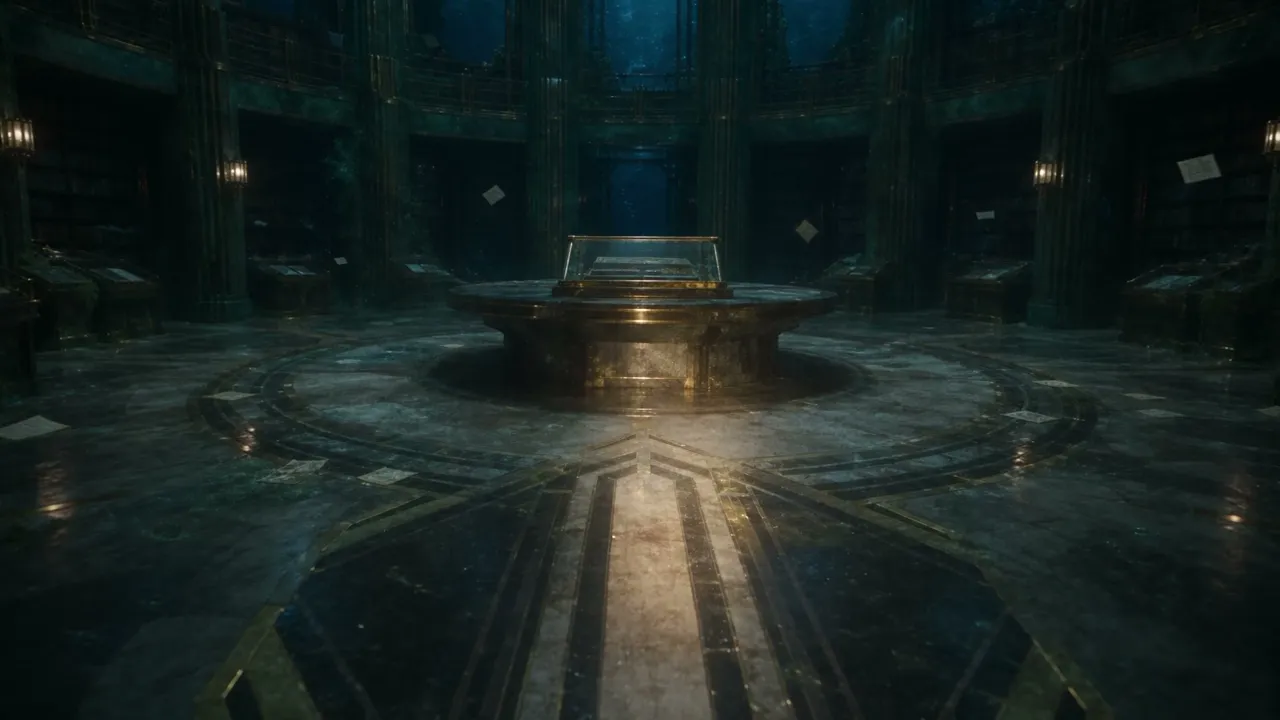
The Last Library Under the Sea
A lone archivist enters a submerged library to recover its final living memory. The payoff is emotional rather than explosive: the dark archive answers with a trail of bioluminescent light.
View reference recipe and 30-second prompt
Reference package: Image 1: archivist identity and deep-sea suit sheet; Image 2: submerged art-deco library and circular reading-room architecture; Image 3: material and biological style board for aged brass, wet glass, paper, algae, and blue bioluminescence. These are visual references only; no audio reference is required.
Seedance 2.5 prompt: Create a 30-second 16:9 photoreal cinematic mystery. Use Image 1 only to preserve the archivist’s face, short dark curls, blue deep-sea suit, brass fittings, boots, gloves, and hand lamp. Use Image 2 as the fixed architecture and spatial layout of the submerged circular library. Use Image 3 only for materials, surface aging, suspended particles, and restrained blue bioluminescence. Never reproduce a reference-sheet layout, multiple character views, studio background, or collage in the video. Generate the complete synchronized soundtrack from this prompt; use no external audio reference. 0–5s: wide interior establishing shot across the dark circular reading room; distant water pressure, a low hull groan, sparse bubbles, and a nearly inaudible 52 BPM bowed-bass pulse. 5–11s: the archivist enters through the left aisle and walks between shelves; close oxygen breathing, slow boot contact, cloth movement, and soft paper drift. 11–18s: the brass lamp reveals the closed glass atlas at the center; one controlled push-in passes behind a real pillar, with a faint glass resonance as the atlas enters the light. 18–24s: the atlas stays physically closed while a thin line of blue organisms wakes beneath its glass and travels through the existing floor inlay; add a delicate crystalline tone that follows the light. 24–28s: the bioluminescence climbs the shelves in connected paths until the archive resembles a constellation; the score opens into warm low strings without choir or percussion. 28–30s: hold on the archivist’s quiet reflection in the atlas glass; one distant whale call and the final glass tone resolve together. No dialogue. Keep camera movement deliberate and physically plausible. No extra diver, face or suit change, loose helmet, disintegrating books, opening atlas, sudden creature, flooding surge, floating text, logo, loud trailer hit, generic epic music, or uncontrolled morphing.
Platform Zero
Two strangers discover that the last train is announcing events one minute before they happen. The scene tests dialogue, eyelines, voice identity, tension, and one restrained science-fiction reveal.
View reference recipe and 30-second prompt
Reference package: Image 1: identity and rust-coat wardrobe for the woman; Image 2: identity and navy transit uniform for the man; Image 3: empty late-night platform, green tile, benches, lighting, track position, and tunnel geography. Voices, station ambience, Foley, and the final chime are generated directly from the prompt.
Seedance 2.5 prompt: Create a 30-second 16:9 grounded science-fiction dialogue scene. Use Image 1 only for the woman’s identity, shoulder-length auburn hair, rust wool coat, charcoal sweater, and understated performance. Use Image 2 only for the man’s identity, close-cropped gray hair, navy transit uniform, white shirt, black tie, and restrained demeanor. Use Image 3 as the fixed platform architecture, green tile, benches, light direction, tunnel, track, and camera geography. Do not show portrait backgrounds or reproduce the source images as posters, split screens, or collages. Generate all voices and synchronized sound natively from this prompt; no audio references. Keep three clearly different voices consistent: the station announcement is calm, gender-neutral, filtered through an old PA; the woman has a natural warm mid-register voice with nervous restraint; the man has a quiet dry baritone. Never overlap spoken lines. 0–6s: wide locked shot; the woman waits frame left while the man looks into the tunnel. Fluorescent hum and distant rail vibration. The PA says exactly, “The train arriving now has already departed.” 6–13s: medium two-shot. She gives one small nervous half-laugh and asks exactly, “Did it just say already?” After a short pause he replies, “It always starts one minute early.” 13–19s: lights switch off one by one down the tunnel, then a low wind reaches their coats; two clean reaction close-ups maintain correct eyelines and lip sync. 19–25s: the glossy tiled wall shows the reflection of a train while the real track remains empty. The man says exactly, “If the doors open, don’t look inside.” No music yet. 25–30s: only in the reflection, the doors slide open; she takes one controlled step back; a single mechanical chime rings and one low synth note rises as the picture cuts to black. Natural performances and intelligible dialogue above ambience. No duplicate people, face drift, voice swap, wardrobe change, wrong eyelines, extra dialogue, random signage, horror distortion, visible train on the real track, teleportation, heavy glitch effects, subtitles, logo, or jump-scare hit.
Paper City Night Courier
A tiny courier carries a warm paper star across a rain-soaked folded city. Material consistency, rhythmic transitions, and a simple purpose turn stylization into a complete miniature story.
View reference recipe and 30-second prompt
Reference package: Image 1: paper courier identity, mustard coat, navy cap, coral square satchel, and proportions; Image 2: folded-paper city construction, navy-coral palette, bridges, stairs, wet streets, and vellum windows; Image 3: exact paper bicycle, glowing folded star, and rooftop lantern designs. The tactile Foley and music are generated from the written direction.
Seedance 2.5 prompt: Create a 30-second 16:9 handcrafted stop-motion-style miniature film made entirely from folded paper, painted card, thread, translucent vellum, and tiny practical lights. Use Image 1 only as the courier character and wardrobe model. Use Image 2 only as the city, palette, architecture, rain, and lighting model. Use Image 3 only as the exact bicycle, star, and lantern model. Do not display turnarounds, prop boards, captions, studio backdrops, or collage layouts. Generate all synchronized audio from this prompt; no audio reference. The soundtrack must combine dry paper folds, tiny cardboard wheel clicks, stitched-rain taps, soft satchel movement, one clean bicycle bell, and a gentle original music-box theme in 3/4 with celesta, muted pizzicato strings, and no vocals. 0–5s: inside a tiny paper shop, a paper shopkeeper offers the glowing folded star; the courier places it carefully into the coral satchel and closes the flap in two readable stop-motion beats. 5–11s: side tracking shot as the courier cycles left to right through narrow wet streets; both wheels rotate cleanly and paper rain falls as straight stitched lines. 11–17s: a raised bridge blocks the route; in three deliberate beats the courier dismounts, lifts the bicycle by its frame, and climbs a folded stair. 17–23s: overhead view as the courier crosses connected rooftops; the star’s warm glow remains inside the satchel and softly illuminates vellum windows below. 23–27s: the courier removes the same star and seats it once inside the empty rooftop lantern; the district lights spread outward window by window, synchronized to three rising music-box notes. 27–30s: wide miniature-city hold; the courier rings the bell once and the final celesta note decays into rain. Keep stop-motion cadence around 12 frames per second and preserve tactile imperfections. No photoreal human or hand, melting paper, elastic limbs, changing scale, duplicate courier or bicycle, spinning wheels while stationary, floating props, liquid morphing, frantic camera, dialogue, generated text, logo, or existing melody.
Turn product benefits and transformations into watchable stories
Five productions cover product-first social advertising, fashion spectacle, music-led lifestyle, creator-fronted technology, and a clear construction progression. The common thread is a readable commercial idea and a credible finish—not one repeated visual template.
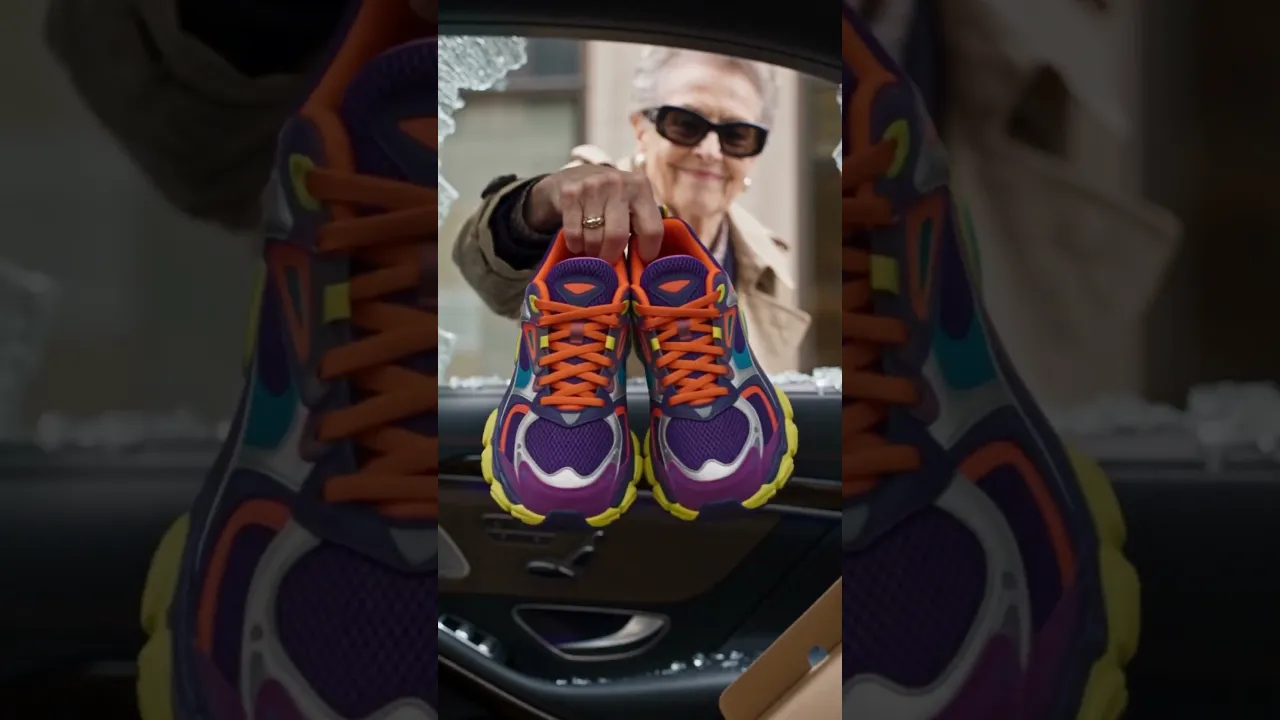
One Product Photo Becomes a Complete Sneaker Commercial
A vivid pair of fictional sneakers moves from an immediate human reveal into energetic product detail and campaign-ready motion. The product stays recognizable while the film adds personality, pace, and a reason to remember it.
Why this works as a social advertisement
The opening puts the product directly in a person’s hands instead of spending the first seconds on an abstract setup. Color, character, movement, and close product detail all support the same playful positioning, while the vertical composition is ready for Shorts, Reels, and paid social placements.
NYC Bullet Time: A Collision Becomes the Campaign
A luxury street-fashion setup turns one accidental bump into a scroll-stopping product inspection. The heroine remains standing while sunglasses, coffee, and phone freeze around her and the camera moves freely through the moment.
View the production breakdown
Reference package: Image 1 locks the heroine, leather jacket, white dress, boots, handbag, and coffee cup; Image 2 supplies the daylight Manhattan crossing; Image 3 locks the black angular sunglasses; Image 4 locks the phone and active call screen. Each image has one job and remains a separate reference.
Shot logic: the camera rises from the boots to the heroine’s face, a passerby with a Labrador clips her arm, and the three hero objects leave her hands and face. Time slows to almost zero while the camera visits the sunglasses, coffee, and phone in turn. Time returns only for the objects: they fall naturally while the heroine regains balance and remains standing. This keeps the fashion subject, product details, and bullet-time effect readable inside one fast social advertisement.
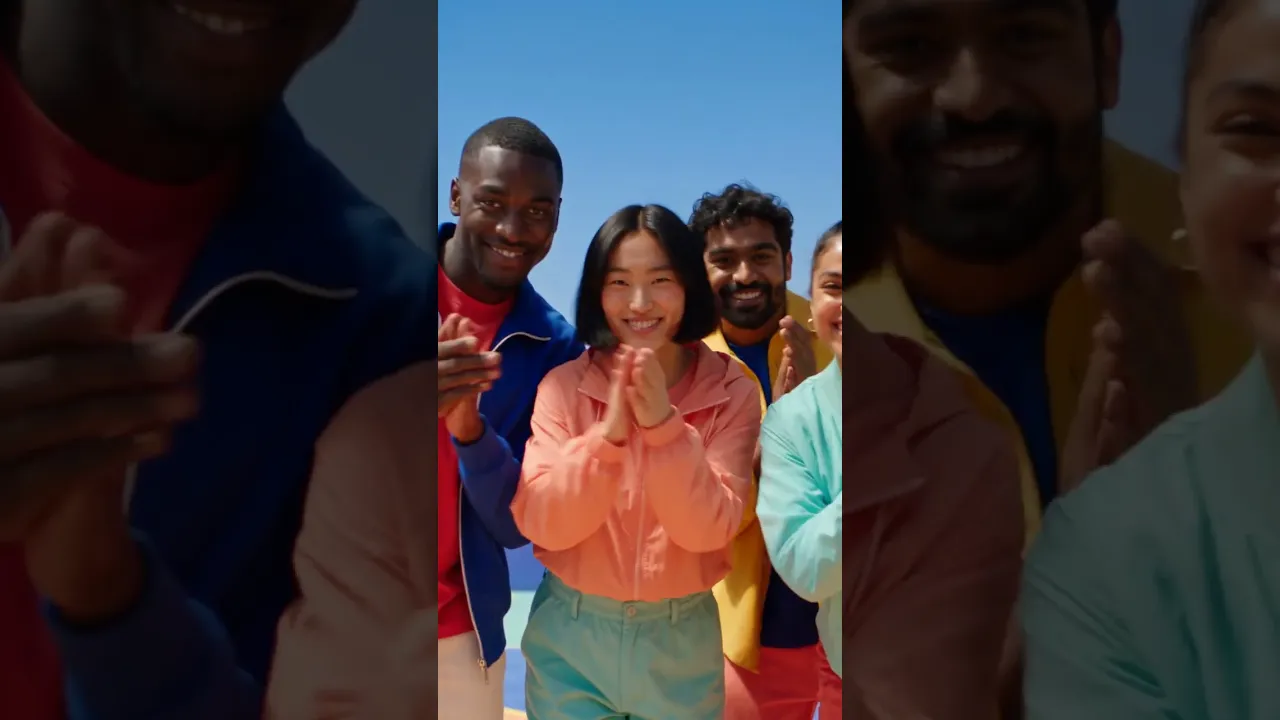
Kito Beat: Turn the Court into a Dance Floor
A bright portable speaker becomes the center of a sunlit neighborhood dance session. Saturated color, real smiles, coordinated movement, and native music make the benefit instantly visible and audible.
View reference recipe and 30-second prompt
Reference package: Image 1: exact compact Kito Beat speaker with cobalt body, coral grille, yellow carry loop, one circular light ring, stable proportions, and no readable branding; Image 2: four distinct friends with fixed faces, body proportions, and colorful streetwear; Image 3: one bright outdoor court with painted peach, aqua, cobalt, and yellow surfaces; Image 4: close material reference for grille mesh, soft-touch shell, carry loop, and light ring. All music, laughter, court ambience, and Foley are generated natively.
Seedance 2.5 prompt: Create a 30-second vertical 9:16 joyful live-action portable-speaker advertisement in clean midday sun. Compose every shot natively for mobile vertical viewing. Keep the speaker, all faces, complete bodies, feet, and important actions inside the central 70% of the frame; never crop a face, foot, product edge, or carry loop. Use Image 1 only for the exact speaker geometry, cobalt shell, coral grille, yellow loop, single light ring, scale, and materials. Use Image 2 only for the four friends’ separate identities, outfits, and body proportions. Use Image 3 as one fixed outdoor-court architecture and palette. Use Image 4 only for product material detail. Never show reference sheets, borders, collages, or readable text. Generate all synchronized sound from this prompt; no audio reference. Create an original upbeat 124 BPM funk-pop instrumental with punchy bass, handclaps, bright brass stabs, crisp drums, and no vocals; add natural shoe contact, laughter, and open-air court ambience. 0–5s: vertical macro product hero on the low yellow plinth, speaker fully visible in the lower center; the light ring switches on once as the first bass note lands. The speaker never moves. 5–11s: the camera pulls back through depth to reveal the four friends in a compact staggered formation—two closer to camera and two behind them. The tall male lead starts one clean eight-count and the others join, smiling naturally; nobody enters through the side edges. 11–18s: three energetic hard cuts show synchronized footwork, one group clap, and one coordinated turn in the same compact formation; preserve every identity and outfit, keep all four complete bodies visible and feet in real floor contact, and avoid acrobatics. 18–24s: make one controlled 45-degree camera arc around the stationary lower-center speaker while the four friends perform a compact side-to-side sequence stacked naturally in the upper background; product remains sharp and correctly proportioned. 24–27s: two bright portrait reaction close-ups and one low vertical shot of four pairs of shoes landing together on one beat. 27–30s: clean vertical speaker hero on the yellow plinth in the lower center, with the four friends dancing softly out of focus above it and the upper 18% left clean for campaign copy added later. No wide lateral formation, side-edge entrance, 180-degree orbit, dark mood, night lighting, empty venue, speaker redesign, duplicate product, floating product, hand interaction, distorted grille, cropped body, extra limbs, sliding feet, identity swap, strobe, confetti storm, generated text, real logo, dialogue, or existing song.
Melo Air: Sell Comfort Through a Real Routine
A male creator tests one cheerful pair of over-ear headphones in a sunlit café. The product is worn once, stays correctly oriented, and communicates comfort through a relaxed daily routine rather than fragile visual effects.
View reference recipe and 30-second prompt
Reference package: Image 1: male creator identity, short dark curls, warm complexion, green overshirt, white T-shirt, and cream trousers; Image 2: exact Melo Air over-ear headphones with sky-blue headband, cream earcups, coral inner accent, stable left-right orientation, and no readable logo; Image 3: one bright café table beside a large window with yellow chair, pale wood, plants, and colorful street reflections. Generate all speech, café ambience, Foley, and music from the prompt.
Seedance 2.5 prompt: Create a 30-second vertical 9:16 upbeat male creator advertisement for fictional Melo Air over-ear headphones. Use Image 1 only for the creator’s exact face, hair, body proportions, green overshirt, white T-shirt, cream trousers, and easygoing personality. Use Image 2 only for the exact sky-blue headband, cream earcups, coral inner accent, cushion thickness, proportions, and left-right orientation. Use Image 3 as one fixed bright café location and table layout. Never show reference sheets, product turnarounds, borders, or generated text. Generate all synchronized audio from this prompt; no audio reference. Give the creator one consistent natural adult male voice: warm mid baritone, conversational, lightly amused, never an announcer. Use an original optimistic 106 BPM groove with muted drums, rounded bass, bright guitar chops, and no vocals; duck it beneath speech. 0–6s: handheld seated selfie in the sunlit café; the creator holds the folded headphones beside the unobstructed face and says exactly, “I wanted headphones I could wear past the first three songs.” 6–10s: stable medium shot; with both hands he places the headphones onto his head once in one continuous natural action, earcups covering both ears correctly. Do not cut during placement. 10–17s: same table and outfit; one side close-up shows cushion fit and headband position, then a front medium shot shows him working with a relaxed small head nod while café activity stays soft in the background. No visible laptop screen or button pressing. 17–23s: handheld selfie while still wearing the same headphones; he says exactly, “No pressure points, no constant adjusting—just my playlist.” Keep both hands below frame and the product fully visible. 23–27s: two simple bright lifestyle cuts in the same café—one natural smile toward the window and one shoulder-level profile with colorful street reflections; no product removal. 27–30s: hard cut to the exact headphones resting closed on the same table, fully visible and stationary, with the same creator softly out of focus behind them; one musical resolve and clear space for copy added later. No dark mood, isolation narrative, projector, device beam, product redesign, duplicate headphones, reversed earcups, floating product, repeated placement, touching controls, warped ears, identity or outfit change, visible UI, generated subtitle, real logo, second speaker, aggressive sales gesture, or loud music.
From Empty Site to Finished Home
A single vertical sequence follows a house through foundations, structure, exterior work, and the finished build. The result makes a process that normally takes months immediately understandable without turning it into an exaggerated spectacle.
Why this output earns a flagship slot
The longer generation window is used for visible progress rather than extra cuts. Camera position, site geography, surrounding forest, and the footprint of the house remain readable while each construction stage advances the same build.
This structure works for architecture studios, property developers, renovation teams, manufacturing processes, project updates, and any campaign where the transformation itself is the proof. It balances visual momentum with a grounded, professional tone.
Feel native to the feed without becoming interchangeable
Beauty, skincare, and a practical everyday backpack demonstration show three different kinds of creator content: personal recommendation, fast product proof, and useful hands-on explanation.
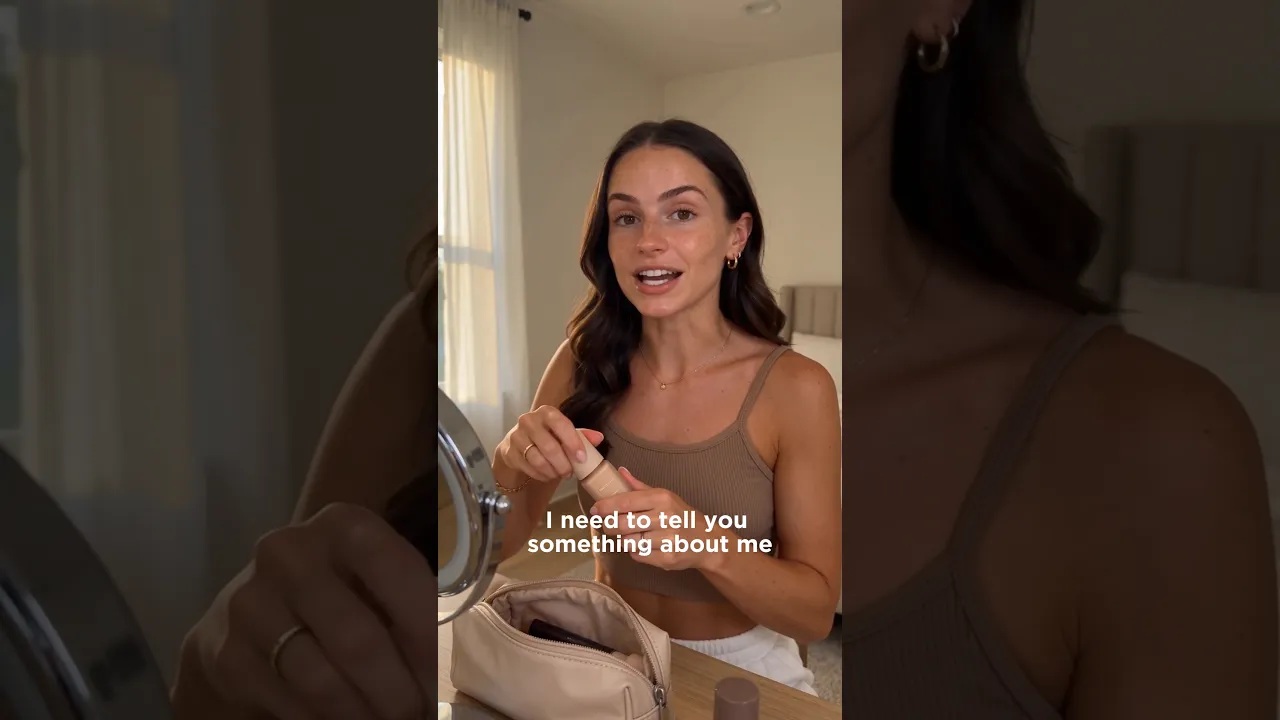
One Creator, a Complete Beauty UGC Ad
A fully AI-generated creator opens with a direct scroll-stopping confession, handles and applies a complexion product, and speaks with the relaxed timing of a real vanity-table recommendation.
Why this output works as UGC
The scene keeps one identity, one bright room, one product, and one camera relationship for the full message. Small pauses, natural hand movement, direct eye contact, and a visible application moment make the video feel like feed-native creator content rather than a compressed studio commercial.
A 15-Second Product Proof That Gets to the Point
A tactile cream macro gives the product immediate visual weight before the creator application shot. The short structure is useful when social proof matters more than a long narrative setup.
Why this output works as UGC
The product is introduced first, the texture is readable, and the creator appears in the same warm everyday visual language rather than an unrelated glamour setup. That direct sequence—product, texture, person, result—is easy to understand without extra visual effects.
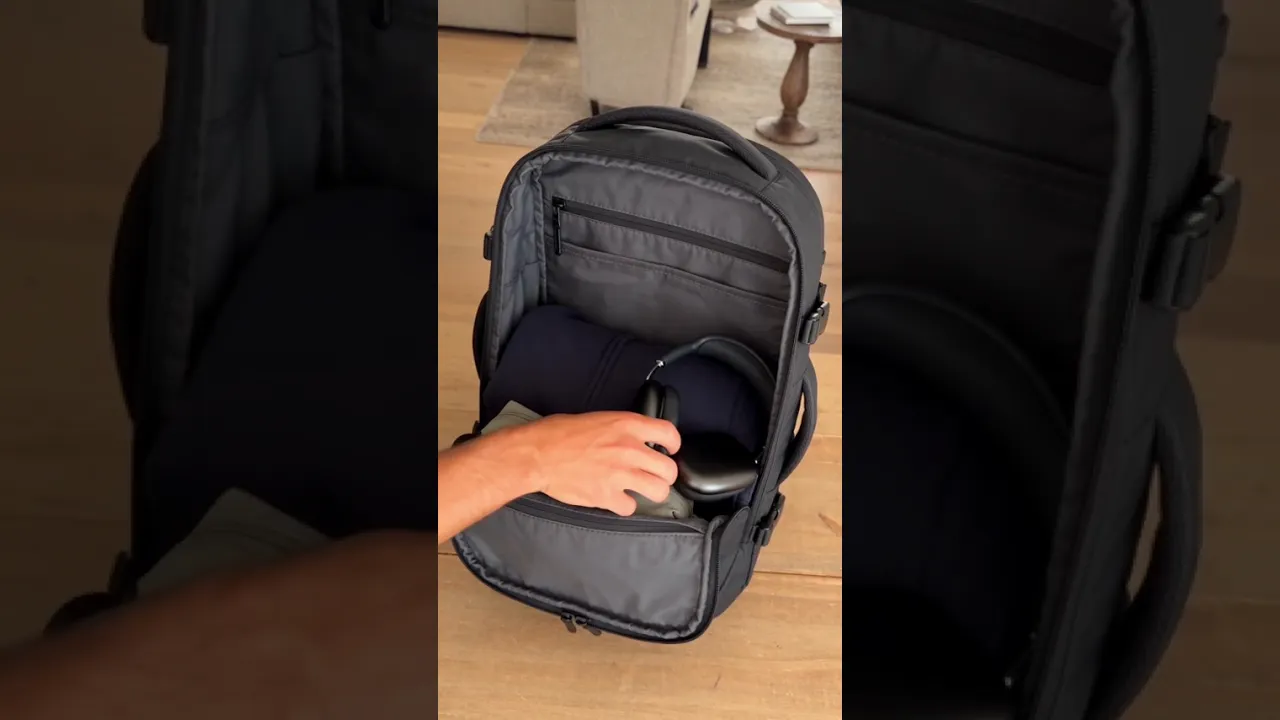
Show What Fits Without Turning It into a Studio Ad
A creator opens a real-looking backpack and packs the items people actually carry. The usefulness is visible immediately, while the handheld vertical framing keeps the result native to a recommendation feed.
Why this output works as UGC
The product remains open, correctly oriented, and easy to inspect while each item is placed into a believable compartment. The demonstration answers a practical buying question—what fits and how it is organized—without relying on exaggerated effects or a scripted sales monologue.
Featured capability · Video edit
Keep the filmed performance. Rewrite the reality around it.
This existing Neurohelper AI example starts from real outdoor footage, preserves the person and camera movement, then introduces a magical world effect into the recorded scene. It deserves its own stage because it shows a different value from generating a new clip: rescuing and expanding footage you already have.
A transformation that follows the original camera
The value is not a disconnected VFX overlay. The new light, surface detail, movement, and atmosphere need to belong to the same ground, tree, perspective, and performance captured in the source video.
Use this route for creator effects, fantasy reveals, campaign activations, environmental redesign, green-screen work, or targeted changes to an otherwise approved take.
Edit video with Seedance 2.5Already created in Neurohelper AI
More real outputs across fashion, social, action, and comedy
This supporting gallery widens the range beyond the nine flagship cases with creator presence, everyday spectacle, stylized action, editorial motion, and simple ideas with viral clarity.
A fashion experiment built around presence
Polished portrait movement and campaign styling keep attention on the model, silhouette, fabric, and editorial mood rather than relying on frantic cuts.
A quiet morning scene that feels observed
Casual framing, room ambience, and restrained performance show why creator content often benefits from believable pauses and ordinary detail more than spectacular effects.
A cinematic event seen through social footage
The eclipse remains the hook, while handheld behavior, phones, reactions, coast ambience, and changing light make the extraordinary event feel witnessed rather than composited.
Scale, chase energy, and an original visual world
A caped protagonist and massive stone creature turn a short sequence into an animated set piece with readable scale, environment, pursuit, and cinematic framing.
One instantly readable idea carries the whole clip
Cats holding a serious board meeting need almost no explanation. Consistent characters, reactions, laptops, and room geography let the absurd premise stay clear and shareable.
One connected Neurohelper AI workflow
The strongest 30-second video starts before generation
Seedance 2.5 becomes more useful when the brief, reference assets, video, and finishing work stay connected. Neurohelper AI places those stages in one subscription instead of making the team rebuild context across separate tools.
Turn the goal into a production brief
Define audience, message, narrative arc, shot beats, dialogue, claims, review criteria, and exactly what must remain consistent.
Approve the visual anchors
Create character sheets, product packshots, environments, style boards, first frames, clay layouts, and clean campaign compositions.
Direct Seedance 2.5
Combine references, timecoded action, camera language, native audio, editing requests, and extensions into the audiovisual production.
Finish the release
Refine voice, sound effects, ambience, music, isolation, and alternate versions, then continue into social cuts and campaign assets.
Reference and editing strategy
Give every input one clear job
More references are not automatically better. The model becomes easier to direct when each asset has a declared role and conflicting signals are removed before generation.
Controlled model comparison
Wan 3.0 and Seedance 2.5 take on the same motorcycle challenge
A side-by-side action test makes small model decisions easy to see: motorcycle geometry, rider contact, wheel rotation, tunnel reflections, motion blur, camera speed, and whether the shot preserves a convincing sense of weight.
Watch the physics and continuity—not only the first impression
Compare how both versions hold the motorcycle’s proportions, connect the rider to the bike, animate the wheels, preserve lane direction, and carry reflections across a fast tunnel shot. The result is a practical way to choose a model for vehicle, sports, and high-motion advertising.
Controlled model comparison
MiniMax H3 and Seedance 2.5 interpret the same dragon-flight idea
A useful comparison keeps the concept recognizable and asks what each model does with flight, rider continuity, scale, environmental motion, camera energy, and audiovisual weight. One clip never declares a universal winner; it reveals how the engines make different decisions.
Compare the decisions, not only the polish
Watch how each version handles the creature’s mass, wing cadence, rider position, background speed, framing, and sense of danger. The best choice depends on the specific shot and campaign—not just the model name.
Seedance 2.5 model reference
The capabilities that shape the production plan
Capabilities refer to the underlying model and may vary by the currently active Neurohelper AI integration, plan, format, and safety requirements. Technical details were checked against the official Seedance 2.5 model page and ByteDance Seed launch article. Last reviewed August 23, 2026.
Frequently asked questions
Seedance 2.5 FAQ
What is Seedance 2.5?
Seedance 2.5 is ByteDance Seed’s next-generation joint audio-video model for creating longer, more coherent audiovisual work from prompts and multimodal references. It focuses on 30-second storytelling, reference control, native sound, extensions, and precise video editing.
How long can Seedance 2.5 videos be?
ByteDance describes up to 30 seconds in one generation and up to two rounds of extension. That lets a production contain a complete short-form arc or continue into a longer piece while preserving the established audiovisual language.
Can Seedance 2.5 generate sound and dialogue?
Yes. The underlying model jointly generates video and audio, including dialogue, voices, ambience, Foley, effects, and music aligned with visual events. Clear speaker references, short lines, declared timing, and a controlled sound hierarchy improve the brief.
What references can Seedance 2.5 use?
The official launch describes up to 30 images, 10 video clips, and 10 audio clips in one pass. References can communicate identity, product design, locations, composition, movement, camera language, performance, sound, style, or spatial structure. Exact fields available in Neurohelper AI can change with the active integration.
Can Seedance 2.5 edit an existing video?
Yes. ByteDance describes timestamp-level targeted editing, reference-based video changes, camera perspective editing, and green-screen workflows. The featured magic-world example on this page shows recorded footage being augmented while preserving its person, movement, and camera.
Is Seedance 2.5 good for advertising and UGC?
Yes. Its longer runtime is useful when an advertisement needs a hook, demonstration, proof, reaction, and final composition rather than one isolated product moment. The same continuity and native-audio strengths support creator reviews, multi-speaker campaigns, product films, fashion, events, and branded stories.
What is the difference between Seedance 2.0 and Seedance 2.5?
Seedance 2.0 remains a capable and more economical option for focused 15-second ideas. Seedance 2.5 extends single-pass generation to 30 seconds and strengthens long-form storytelling, multimodal reference capacity, realism, editing, transitions, and extension workflows.
Is Seedance 2.5 available in Neurohelper AI?
Yes. Seedance 2.5 is available in Video Master alongside other leading video models. You can prepare the brief in Chat Master, build references in Image Master, generate or edit the video, and continue into voice, sound, music, and campaign assets within one Neurohelper AI workspace.
The flagship video workflow in Neurohelper AI
Build a complete 30-second story, campaign, or creator film—not another unfinished clip.
Bring the brief, references, video generation, editing, native sound, and the rest of your AI production stack into one connected workspace.